CineRush

What is a faceless YouTube channel?
A faceless channel tells stories, explains topics or ranks things without the creator appearing on camera. The video is built from narration, footage (stock clips, archive photos, maps, motion graphics) and on-screen text. Documentaries, history, "top 10" lists, science explainers, true stories and finance breakdowns are some of the biggest faceless formats on YouTube.
The appeal is simple: you can stay private, work in any language, and produce far more videos than a face-to-camera creator — because every part of the process can be done on a computer.
Step 1: Pick a niche people search for
A good faceless niche has three things: steady search demand, plenty of visuals you can legally use, and advertisers who pay for that audience. Strong niches in 2026 include:
- History & documentaries — wars, empires, disasters, lost cities.
- Science & space — how things work, mysteries scientists can't explain.
- Money & business — how companies make money, luxury, economics.
- True stories & mysteries — unsolved cases, strange events (told responsibly).
- Top 10 & facts — ranked lists with a clear payoff.
Step 2: Write a script that keeps people watching
Retention decides whether YouTube recommends your video. Every strong script has the same shape:
- A hook in the first 10 seconds — a surprising claim, a question, or the end of the story first.
- A clear promise — what the viewer will know by the end.
- Short chapters with a mini-cliffhanger at the end of each one.
- A payoff that answers the hook.
Research matters: facts, dates and numbers should be right. AI tools can research live sources and draft a script in seconds, but always read it before you publish.
Step 3: Record a voiceover (or use an AI voice)
You can record your own voice with a USB microphone, or use an AI narrator. Modern AI voices — including ElevenLabs-quality voices — sound natural enough for documentaries and explainers. Match the voice to the niche: calm and deep for history, energetic for facts and Shorts.
Step 4: Find footage you're allowed to use
This is where many new channels get into trouble. Only use visuals with a licence that allows YouTube and commercial use:
- Stock libraries such as Pexels and Pixabay (free for commercial use).
- Public-domain archives — government, NASA and museum collections.
- AI images for scenes nothing real can show.
Keep a record of where each clip came from. CineRush, for example, writes a licence report for every video automatically.
Step 5: Edit, add captions and music
Cut every scene to the narration, add chapter titles, captions and royalty-free music, and mix the sound so the voice stays clear. Editing by hand typically takes 4–8 hours per 10-minute video — the step AI saves the most time on.
Step 6: Thumbnail, title and description
Your thumbnail and title decide whether anyone clicks. Use one big subject, 2–4 bold words, high contrast and a clear emotion. Write a title that makes a promise the video keeps. Add chapters and relevant tags in the description.
The fast way: let AI do the whole production
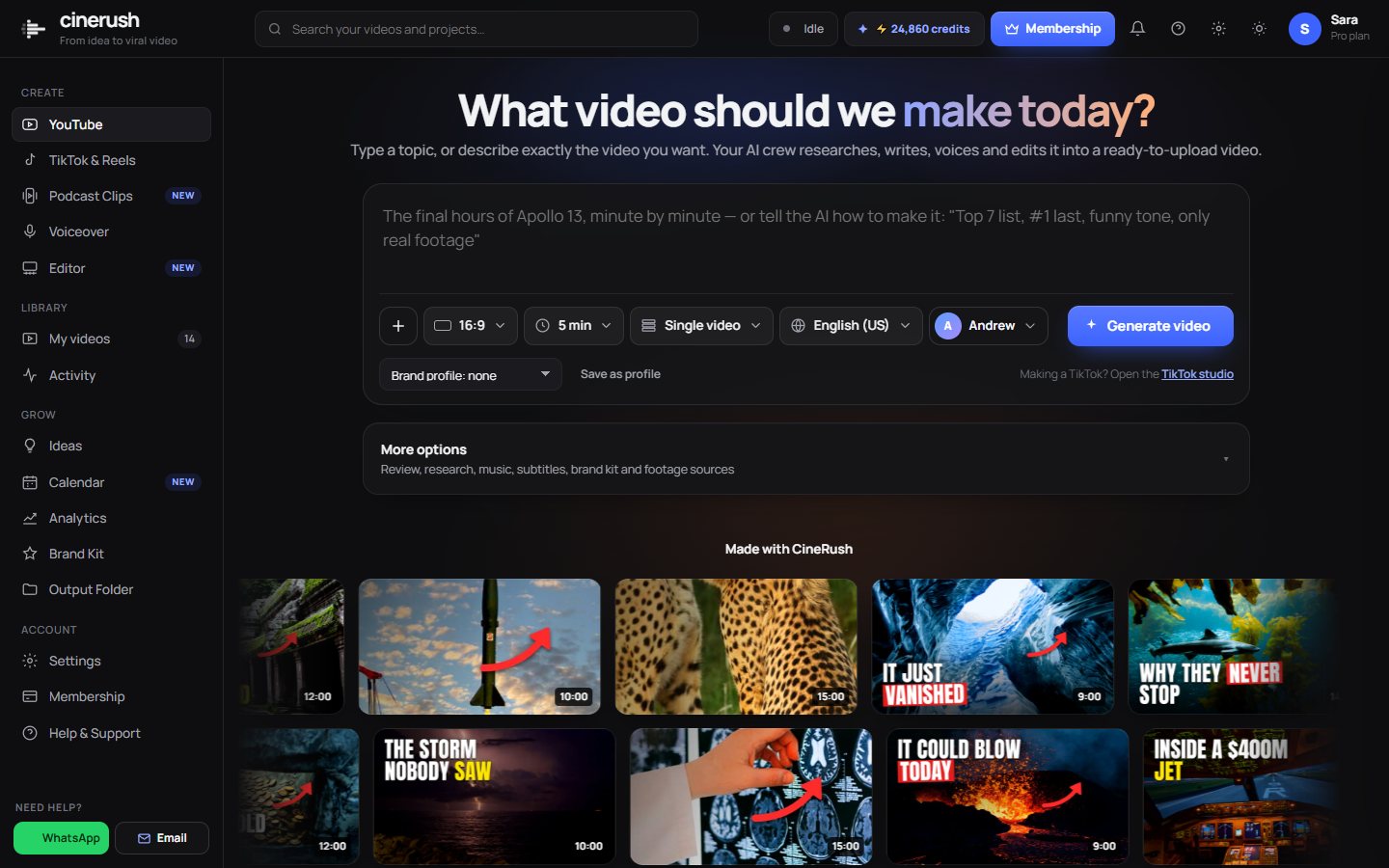
With an AI video maker like CineRush, you type one topic — for example "a 10-minute documentary about why the Titanic sank, calm and factual" — and the app researches, writes the script, records the voice, finds licensed footage, edits it with captions and music, and makes the thumbnail, title, description and chapters. You approve the plan first and can change any scene afterwards.
Step 7: Get monetised
To earn from ads you need to join the YouTube Partner Program. Read our guide to YouTube monetisation for faceless channels for the current requirements and how to stay safe with AI content.
Quick answers
Can faceless channels make money?
Yes. Many faceless channels earn from ads, sponsorships and affiliate links. What matters is original value — your topic choice, research, script and editing — not whether your face is on screen.
How many videos should I post?
Consistency beats volume. Two to three good videos a week is a strong start; AI tools make daily uploads realistic if quality stays high.
Make your first video free
CineRush researches, writes, voices and edits a ready-to-upload YouTube video from one topic — and turns long podcasts into viral clips. 3 free videos, no card.
Download CineRush for Windows See pricingFounder of CineRush. Runs faceless YouTube channels and teaches creators how to earn online with AI tools. YouTube: Learn with Huzzi · More about Huzaifa →
Keep reading